
What is the carpal tunnel syndrome clinic ?
This service aims to minimise treatment delays to provide the best outcome possible. It includes evening consultations and surgeries if more convenient.
Appointments can usually be arranged within a week and if surgery is required this can usually be booked within a couple of weeks.
Consultations and surgery are undertaken by a specialist consultant orthopaedic surgeon at the Nuffield Hospital, Cheltenham.
To book an appointment:
01242 246507
carpaltunnel@upperlimbdoctor.co.uk
What is carpal tunnel syndrome ?
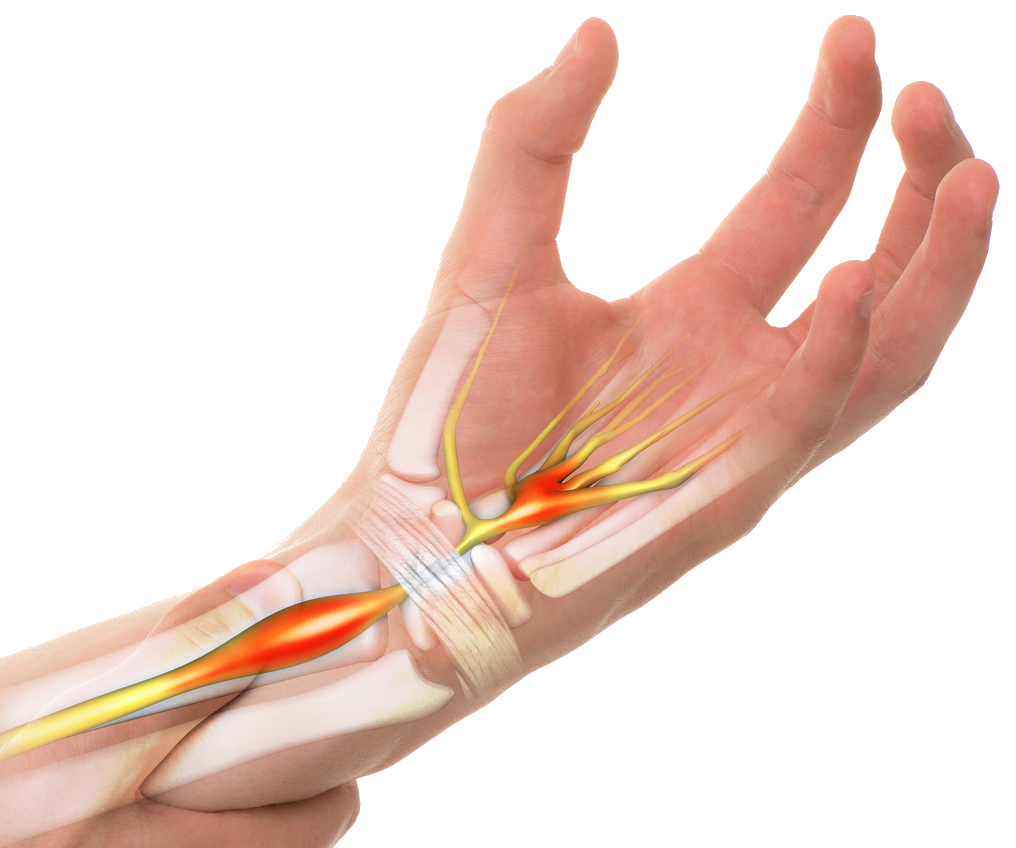
Carpal tunnel syndrome occurs when the median nerve is compressed at the wrist as it passes into the hand.
The median nerve supplies feeling to part of the hand and also power to some of the muscles in the hand. When the nerve is compressed, it stops working properly, which can manifest as pain, pins & needles, numbness, and even weakness in the hand. In the early stages nerve damage is reversible, but as the condition progresses, damage can be irreversible, leading to permanent numbness and weakness.

What causes carpal tunnel syndrome ?
There are many factors which can lead to carpal tunnel syndrome. These include increased pressure on the wrist from the outside such as resting the wrist on a keyboard, certain repetitive activities, or a tight plaster, and increased pressure within the wrist such as swelling in pregnancy, hypothyroidism, obesity, arthritis, and smoking.
What are the symptoms of carpal tunnel syndrome ?
The commonest symptoms are pins and needles or numbness in the hand, as well as pain which can be particularly troublesome at night, waking people from sleep.
PAIN: While pain can occur at any time it is commonest at night and people often report that they wake up in the middle of the night as a consequence.
PINS & NEEDLES: Initially people report intermittent pins and needles. This can be brought on when on the phone, using a computer, driving, or many other activities.
NUMBNESS: As time progresses and the nerve becomes progressively damaged, then pins and needles may be replaced with a constant numbness / loss of sensation. It can be difficult doing fine tasks such as needlework or doing up shirt buttons.
WEAKNESS: With ongoing damage to the nerves, the muscles of the hand may be affected and people may find their grip becomes weak. This may manifest as difficulty taking off bottle tops or undoing jar lids.


Do I have carpal tunnel syndrome, or is it something else ?
The best way of determining whether you are suffering from carpal tunnel syndrome or not is to seek expert medical advice. This will involve a thorough review of your symptoms, along with a specialised examination. The assessment aims to ensure no alternative cause for the symptoms and provide an accurate diagnosis.
The features of carpal tunnel syndrome can vary from one person to the next and also over the course of the condition, so it may not be straight forward to diagnose.
For information on other common conditions affecting the hand and wrist click here.
How is carpal tunnel syndrome treated ?
Usually in the early stages, carpal tunnel syndrome can be treated effectively by wearing a splint at night which holds the wrist straight. This is effective as the nerve is compressed when the wrist is very flexed or very extended, something which people often do while asleep.
In those people where the night splint has not resolved the problem, or where there is continuous numbness or weakness, then surgery is usually advised. Surgery aims to release the median nerve at the wrist, which is where the nerve is being squashed. The release is performed under local anaesthetic and involves making a small cut in the palm of the hand.